The Map of the Arts.
by Beatrice Gaggiotti
Filter:
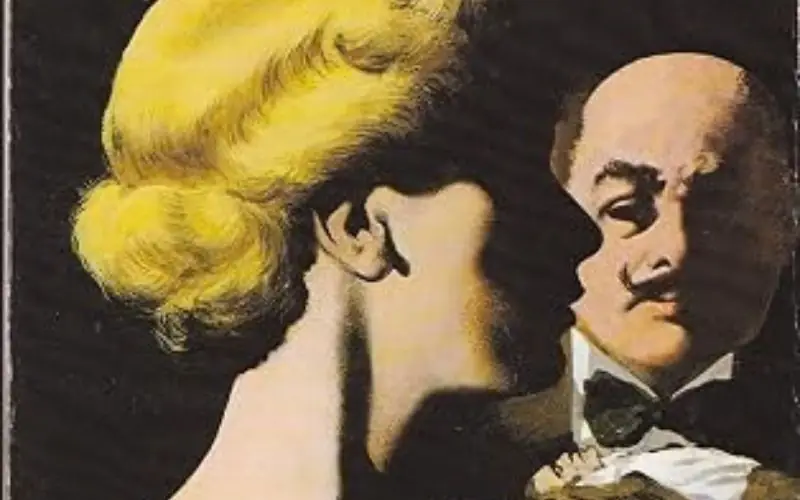
When the “Show” denies the “Tell”: the “Poirot and the Body” case
The narratological analysis of one of Agatha Christie's most complex novels. One of the main rules that is taught in every writing course is: "show, don't tell", meaning “show, don't say.”Don't say what a character is, move that character so that the reader understands who…
Read the article
Subscribe to Beatrice Gaggiotti’s newsletter
and download your gift.
Every month articles, listenings, works to look at with new eyes, reflections, small tips — and
news on videos, courses, books and conferences.
Sections
Read articles by topic
section
Painting
Read the articles on art and painting.
section
Sculpting
Read the articles on sculpture and 3d art.
section
Architecture
Read the articles on architecture and design.
section
Musica rock
Read the music-themed articles.
section
Literature
Read the literature articles.
section
Reading Journal
Read the book and film review articles.
section
Stories and People
Read the biographical essays.
section
Cognitive
Read essays on art and neuroscience.
BOTTICELLI’S SPRING • Some alternative readings | History of art
Sandro Botticelli’s Primavera is one of the most famous paintings in the world and also its author’s masterpiece. Yet, even if it doesn’t seem like it, Spring hides many mysteries and some uncertainties.
BOTTICELLI ‘S BIRTH OF VENUS • AN alternative reading | History OF art
The Birth of Venus by Sandro Botticelli is one of the most famous paintings in the world. Yet a (possible) Neoplatonic reading could overturn what is narrated in the painting itself.
NICOLÒ PAGANINI • Love, illness, pact with the Devil | Biography (Classical Music) History of music
Nicolò Paganini was the greatest violinist of all time, so talented on the violin and so peculiar in his physical appearance that people began to think he had made a pact with the Devil.
THE NEW LIFE OF DANTE ALIGHIERI • Dante’s love for Beatrice | History of literature
Not a love story, but THE love story: that of Dante for Beatrice. And in the Vita Nova it is Dante himself who tells his novel.
Visit Beatrice Gaggiotti’s school:
Ars Accademia Delle Arti.
Drawing, music and writing for every age and level, even for beginners and those starting from scratch.
NeuralLearning™ method.
Presentation
Leader

Beatrice Gaggiotti
For a long time, and even today, the arts have been perceived as a distant territory: a set of complex notions reserved for a few, kept in museum showcases or between the pages of dusty manuals, or, worse, as something little useful.
Having done my job with the arts, I believe in the exact opposite: the arts are not a pedestal to climb on, but a lens to look through.
Culture is in fact a living instrument, an instrument of interpretation of the world that refines our perception.
Learning to decode the structure of a painting, the communication in a piece of music or the plot of a novel means acquiring the tools to read the whole reality: from the films we choose in the evening and the genre books we take on holiday to the people, work colleagues and communication that surrounds us every day.
Integrating painting, sculpture, music and literature into everyday life is not an aesthetic luxury, but a necessity for our emotional and cognitive health.
Feeding thought through beauty and critical analysis makes us more lucid, more analytical, but also more capable of empathy and free from automatism. And more conscious people inevitably form a better society.
This magazine was born with a simple and radical goal: to create bridges instead of building walls. We want to offer concrete ideas, unexpected reinterpretations, moments of encounter and a real map of the arts to show that great culture is accessible to anyone who wishes to cultivate it.
Because culture is not only what you know, but it is how what you know is used: culture is also the way you choose to live.
“The arts have always been important to the health of a nation,
but we haven’t figured it out yet.”
– James Earl Jones –