
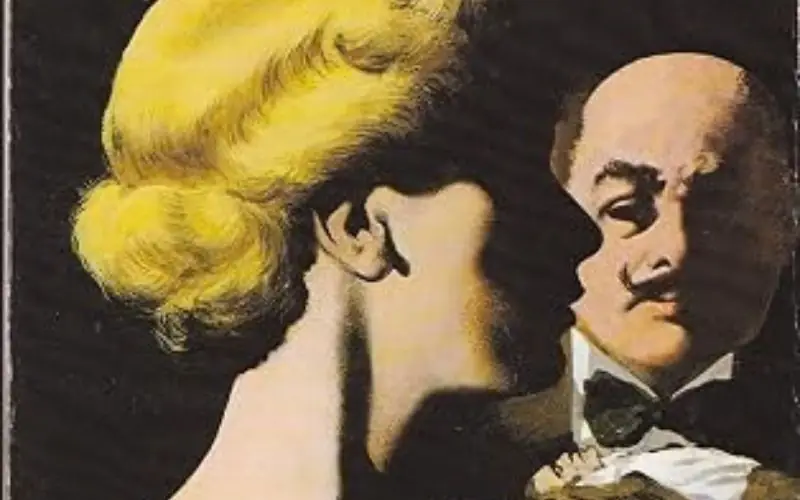
The narratological analysis of one of Agatha Christie's most complex novels.
One of the main rules that is taught in every writing course is: "show, don't tell", meaning “show, don't say.”
Don't say what a character is, move that character so that the reader understands who it is and what its characteristics are.
If John is a great man don't say it, show it: show the reader how great John is.
If John is a selfless man don't say it, show it: show the reader how much John is selfless.
If John is a genius don't say it, show it: show the reader how genius John is.
But what happens when everyone says that John is a fantastic, altruistic, brilliant, unattainable, beloved man… and then the facts show the opposite?
In its 1946 yellow The Hollow, Translated into Italian Poirot and the body, Agatha Christie performs a narrative magic: the "tell" of the characters, or what they say and strive to think throughout the course of the book, is the exact opposite of the "show", or what the reader actually sees.
But ultimately, as in any better fiction lesson, the “show” is always stronger than the “tell,” and the characters will behave accordingly.
Let's read in the deep narrative structure of one of the most complex psychological novels of the famous Lady in Yellow.
Warning: spoilers!
"Is Ygdrasil still there?"
"He threw it down with the lightning."
"Oh, no, not Ygdrasil!"
She was in pain. Ygdrasil was the nickname they had given to the great oak tree. If fate could strike Ygdrasil, nothing was certain. Better not go back.
– Poirot and the body –
The deep narrative structure of “The Hollow”.
This yellow, in the original language The Hollow, that is "La Cava", or the name of the estate where the story takes place, has been translated into Italian as Poirot and the body: yet, in everything, Poirot there is very little (Christie even regretted having inserted him), and even the body is not so important.
What's important here is the psychological dynamics of the characters. And fundamental to their management is something that permeates the novel from beginning to end, but that is not seen: the narrative structure.
Narrative structure that, already from the first pages, comes to life in the mind of those who read not in the form of awareness but in the form of a question, a very specific question: "Really?"
When I started reading the book, after a few pages, I began to wonder: "Really? Or am I the one who means wrong?"
Characters and altered perception: John Christow and Gerda.
The book opens with the swirling figure of one of the protagonists of the story, madame Lucy Angkatell, an eccentric elderly lady (but today we would say middle-aged) who, entering her still-asleep granddaughter's room early in the morning, smears a series of apparent stupidities without a head or tail. And, among these thoughts, two figures emerge, which will be the real pivots of the whole unfolding: the doctor John Christow His wife Gerda..
The one described by Lucy – and later throughout the narrative also by all the other characters – as a beautiful, brilliant, altruistic, incredible man, and so much loved; the second described instead – by Lucy and later by all the others – as the "poor Gerda" with whom you have to have "so much patience" because she is so slow and stupid, poor, just not there she comes to understand things: "I wonder why John married her, someone like her."
Enquire.
In short, the "narrative camera" moves right on John, and then on Gerda.
John who, in his doctor's office on the lower floor of his house, receives his patients with boredom and, while making them a beautiful wax, thinks the worst things among himself, despising and humiliating them mentally, and prescribing them the most difficult drugs to find.
And Gerda who, poor thing, is upstairs waiting for her husband who does not arrive for lunch, wondering with ever-increasing anxiety if she should heat the stew or not: goat wool issue? Gerda gets into trouble for nothing because, poor thing, she's so stupid?
Not really, because she knows that if he didn't warm it up John would be mad at her for the cold stew, but if he did warm it up John would be mad at her for the heat-dried stew. And if John went up at any time and didn't find the meal on the table, he would still be angry.
The real nature of John Christow.
And this is where the story begins: John Christow gets angry about everything.
He gets angry with his wife if she is white but even if she is black, if she succeeds or if she fails, if she contradicts him but even if she does not contradict him. Gerda, in fact, adores her husband and does everything to always support him and never contradict him: but this bothers him, and he gets angry with her; but he would never accept to be contradicted by his wife.
And he does not accept to be contradicted even by the lover – because yes, John has a lover, and even more than one in reality – but, at least, there is good that the lover has a different character and does not make too much trouble to contradict him.
But he gets angry, and practically does not accept that his mistress has ideas of her own. And he gets angry when he sees a sculpture that he doesn't like (his mistress, Henrietta Hine, she is a sculptor, another key character in the story), and forbids her to take her to the exhibition, and gets angry because Henrietta says that she will still bring her works to the exhibition… And that's all.
For every little action or non-action, thought or non-thought, of the wife, the lover, the children… John Christow gets angry and dispenses poison.
And in short, after about twenty pages I began to ask myself: "Really?"
Is John Christow really a magnificent man? Genius? Altruistic? Lovable? …especially lovable?
I stopped for a moment and said to myself: Well, Christie usually sets her novels between the thirties and the forties, it will be the culture of the time. Could it be that at the time it was considered completely normal for a man to treat women this way?
I gave myself this explanation and read again, trying to ignore the fact that I could not stand having John Christow around and ignoring that, although I had never done it in the whole narrative, he knew me as a dangerous person who could raise his hands at any moment.
It will be the cultural vision of those years, I told myself: let's take for granted what the characters say and move forward.
The murder at the Quarry and the search for the murderer.
But it was moving forward, and until the end, that something began to fall apart.
A few pages from the beginning, what classically happens in Christie's novels, is her style: a group of characters find themselves in a very well-defined place, and there the story will take place.
In this case the place is the estate called "The Quarry", and the protagonists are a group of eight people – the two hosts, Lady Lucy and Sir Henry, and then Midge (a granddaughter of theirs), Edward (a cousin), David (another cousin), John Christow and Gerda, and Henrietta – who meet for a weekend that promises to be made of card games and gossip. Too bad, on the first night, John is shot.
Who is the killer?
This is the legitimate question of every mystery, but here, to understand the narrative structure that Christie sets up, we must start from the bottom, we must start knowing who the murderer is.
And beware: hence spoilers.
When Poirot arrives on the scene, John Christow is “shot” on the ground (I really don’t like this direct way of using the verb…) while behind him other people who had heard the shot come running up, and standing there is his bewildered wife, holding a revolver: “I got here, I saw John on the ground, I saw the gun, and I picked it up. I don’t know why I did it—I don’t know why,” she’ll say, looking bewildered and not understanding.
Throughout the novel, it seems that the all-too-simple solution—Gerda fired the shot—is not the right one. And throughout the novel, clues are woven together that, as Poirot says, lead nowhere.
Until, toward the end, it seems clear that the murderer was Henrietta (John’s other lover, the actress—we rule her out from the start because she’s too predictable for a Christie mystery): Henrietta, who seems to give herself away by drawing the Ygdrasil everywhere, and who hides the murder weapon inside her clay horse. Yet, in the end, it turns out that Gerda was the murderer after all.
But how did that stupid, slow, poor Gerda—who’s not exactly quick on the uptake—manage to concoct a first-rate mystery that threw the police, detectives, and even Poirot off the trail? Maybe Gerda isn’t as stupid as she seems?
Yes, Gerda isn’t actually as stupid as she seems—or as she herself wants to appear—but she’s certainly no genius. The point is that everyone—and I mean absolutely everyone—at the Quarry, except for her little cousin Midge and perhaps young David, knows that she was the one who killed her husband John. But everyone—absolutely everyone, especially Henrietta—has decided to protect her and use her relative stupidity as an alibi to claim that it certainly wasn’t her. Everyone begins to draw suspicion onto themselves, only to throw the investigators off the trail, and in the end they succeed: eventually, the police will declare that the murder was committed by someone from outside the group. For unknown reasons, that morning, while John Christow was sitting by the pool, an armed stranger had passed by and shot him, killing him. Only Poirot will uncover the truth, but he’ll choose not to reveal it.
The triumph of "Show" over "Tell."
And here, at this point, comes the realization of the narratological structure by Christie.
As we mentioned at the beginning, one of the main rules taught in every writing course is: "show, don’t tell."
Don't say what a character is, move that character so that the reader understands who it is and what its characteristics are.
If John is a great man don't say it, show it: show the reader how great John is.
If John is a selfless man don't say it, show it: show the reader how much John is selfless.
If John is a genius don't say it, show it: show the reader how genius John is.
But what happens when everyone says that John is a fantastic, altruistic, brilliant, unattainable, beloved man… and then the facts show the opposite?
This is exactly what happens: just like in any great lesson in fiction, “show” is always stronger than “tell,” and the characters will act accordingly.
No matter how many times each of them had repeated—in their minds or out loud—just how amazing John was: selfless, generous, brilliant, unrivaled, lovable, and deeply loved.
He was so lovable and so beloved that, when his wife annoyed him, everyone took his wife's side.
What did it cost the clan to put Gerda in the pillory—figuratively speaking, but not entirely? And yet…
Two Parallel Perspectives: Psychology and Society of the Time.
And from here, in my opinion, two parallel interpretations emerge: the psychological and the social. In fact, the novel weaves psychology into the narrative in such a way that it constantly plays on the rift between the social facade (what the characters say and are expected to say) and their emotional truth (what the characters actually do and feel).
The entire novel is steeped in psychological interpretation, and you realize this by the time you reach the end: everyone protected Gerda.
But why?
Evidently because, as the entire narrative has shown us, John was in reality a selfish, self-centered, short-tempered, verbally abusive, and tyrannical man—especially toward his wife. Society at the time tolerated and even romanticized rudeness in successful men, dismissing it as a “genius’s temperament,” but Christie lets John Christow’s actions speak for themselves (SHOW)… regardless of what the characters say (TELL).
But the book's true psychological magic really comes into its own in the ending, with the twist involving Gerda.
Throughout the book, Gerda is treated with an almost offensive condescension: she is seen as slow, inadequate, and a pathetic figure whom her brilliant husband “has to put up with” (he has to put up with her!).
"I wonder why John married someone like her."
Enquire.
Because John—as he himself thinks—wanted someone he could completely dominate, someone who would never contradict him, someone who would adore him, someone who would worship him, someone who would be his exact reflection, someone who would regard him as a god—in other words: someone to mistreat.
Our John is definitely just a tad too self-centered to be a generous and selfless man. And, above all, lovable.
And so, when Gerda shoots, everyone around her shields her.
Because, after all, they, too, knew that of the two, she was the victim—she was the one condemned to put up with that overbearing and tyrannical husband, that husband who constantly humiliated her with his words and actions. And Gerda had endured it all, always, considering him the best man on the face of the earth, considering herself chosen precisely because he had chosen her… Until she discovered one of his many mistresses: the actress Veronica Cray. At that point, something inside Gerda had snapped: her myth, her world, her everything—her God—had come crashing down.
And so Gerda had fired the shot.
But the Angkatell clan doesn’t protect Gerda simply out of affection or a sense of subtle justice mixed with revenge. The clan also protects her to protect itself: the Angkatells, in fact, belong to the old, high-ranking landed aristocracy and adhere to a tribalist code of ethics; in their eyes, protecting Gerda means not only saving a weak woman but also shielding the clan from public scandal.
So Gerda must not be brought to justice, because not only would it be unjust, but her hanging would be a great disgrace that would tarnish their good name.
And in fact, Gerda doesn’t end up on the gallows, because the police come to believe that the murder was committed by a passing stranger. But Gerda dies all the same, at the hands of the very person who killed her.
Gerda's Tragic Ending and Agatha Christie's Choice.
Toward the end, in fact, Gerda serves Henrietta a cup of poisoned tea: it is Poirot who stops her from drinking it—Poirot, who had figured it all out.
And Gerda—who, yes, isn’t as stupid as she makes herself out to be, but certainly isn’t a genius either—walks away for a moment, and when she returns, she absentmindedly picks up one of the two cups of tea and drinks it: it was Henrietta’s. Gerda dies, poisoned by her own poison.
Agatha Christie spared her, but chose not to glorify her.
He spared her because he didn't send her to the gallows: in the eyes of the law, she is innocent.
In the 1940s, hanging was the punishment prescribed by British law, and sending Gerda to the gallows would have turned the novel into a grim, state-imposed moral punishment, erasing the empathy the reader has developed for a woman who has been manipulated and broken by years of psychological subjugation. By having her die of poisoning, Christie spares her the public humiliation and the brutality of a trial, granting her a form of “poetic justice.”
But he won't let her live.
In fact, one crucial detail must be considered: Gerda dies because she tries to poison Henrietta; this narrative twist prevents her from being fully “exonerated”—it shows us, in fact, that Gerda’s psychological makeup has now broken down, transforming her into a tragic figure who poses a danger to everyone around her.
I wondered if it wouldn't have been better, from a narrative standpoint, to let Gerda live under the protection of her clan.
If the author had chosen to let Gerda “get away with it,” she would have written a cathartic, modern ending of liberation. Instead, Christie chooses a different path—that of psychological tragedy: Gerda, in fact, served poisoned tea to Henrietta, the very person who, more than anyone else, had always protected her—not only in this situation but also all the time before, when everything was “running normally.”
This passage is crucial. The author shows us that years of belittlement and psychological abuse did not turn Gerda into a clear-headed avenger, but rather fragmented her mind: once she crossed the line into murder, Gerda’s paranoia became unstoppable.
Furthermore, Gerda lived for years in a state of total psychological dependence on John: her tragedy lies in the fact that, by destroying her tyrant, she also destroyed the only sun around which her fragile existence revolved. For Christie, there is no version of Gerda in which, having freed herself from her husband, she lives a peaceful and secure life; without John, Gerda is an empty shell. Her death, therefore, does not stem from the author’s moralism (“she sinned and must die”), but from the logical consistency of her tragedy: her “rebellion” was a desperate and suicidal act from the very beginning.
What about John Christow? The mystery of his last words.
What about John Christow?
John Christow dies as he utters the name "Henrietta."
And everyone—the novel is for everyone—will wonder what this is all about, without understanding it.
It wasn't an accusation, apparently, since Christow had seen his killer's face. But then what was it?
Had John Christow called the only woman he loved on his deathbed?
Or maybe John Christow had begged Henrietta to protect Gerda after all?
Or maybe John Christow really did want to frame Henrietta to protect Gerda… or to protect himself?
Visit Beatrice Gaggiotti's school:
Ars Accademia Delle Arti.
Drawing, music and writing for every age and level, even for beginners and those starting from scratch.
NeuralLearning™ method.